
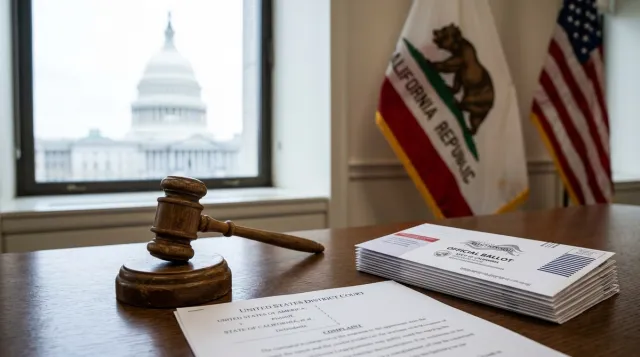
The U.S. DOJ is suing California over alleged noncitizen voting involving around 20,000 suspected voters. It is also asking the federal judge to stop officials from counting their votes in upcoming midterm elections on November 3. This lawsuit has grabbed worldwide attention and raised questions about the voters’ eligibility, security, and the role of authorities and officials in elections. However, the question is whether the voters on the list are ineligible to vote.
Why DOJ is Suing California Over Alleged Noncitizen Voting?#
This lawsuit centres on voter eligibility criteria. Before filing the lawsuit, the DOJ provided a list to the California officials to review in 48 hours on a password-protected USB drive. The federal government demanded that officials not count ballots from unverified citizens until they were verified.
The DOJ argued that only U.S. citizens have the right to vote and that the federal government must enforce voter eligibility criteria.
How did California Respond to This Lawsuit?#
California Officials raised questions about these allegations. Secretary of State Shirley Weber said the DOJ has not provided sufficient evidence or a verification methodology to support its claim about 20,000 voters’ names.
Moreover, Los Angeles County election official Dean Logan claimed that the USB drive was also not password-protected, as the password was written on a piece of paper; that’s why they didn’t consider it a secure medium and reported a security concern.
However, California Attorney General Rob Bonta rejected the DOJ’s demand to withhold the voters' ballots. He also raised questions about the suspected noncitizen 20,000 voters’ names and asked how the number of voters decreased from 190,000to 20,000.
Why is the Timing Important in this Lawsuit?#
The timing matters because the midterm is on November 3, and in California, the voting process has already started. Now, the concerns are not only about voter eligibility but also about how many changes can be made to voters’ records and ballot criteria.
According to election law expert Rick Hasen, the DOJ’s request could face many legal hurdles; he also expressed concern that federal law could conflict with restrictions on large-scale voter-roll purges within 90 days before elections.
How Common is Noncitizen Voting in the USA?#
According to Reuters’ July 2026 investigation, since a federal law made voting by noncitizens a crime in 1996, 129 people have been charged for this offence. Reuters also reported in September that software problems and clerical errors may have added more than 30,000 noncitizens to voter lists since 2000. However, it was not clear how many of them had actually voted.
What Happens Next?#
The next important step in the case will be the federal court’s response. The DOJ wants the disputed ballots to remain uncounted until it verifies voters’ citizenship. California, however, is challenging the federal government’s evidence and its proposed procedure.
Until the court issues an order or new verified information becomes available, do not claim that ballot counting has been stopped or that the alleged voters have been officially declared ineligible.

